 Reevaluating the electrical impact of atomic carbon impurities in MoS2
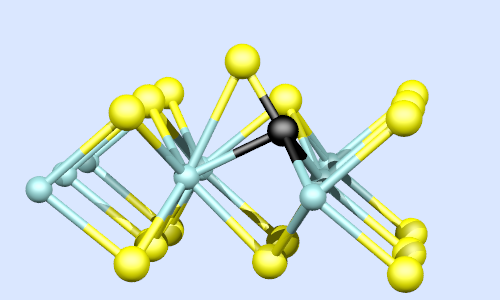
Transition metal dichalcogenides, a family of two-dimensional compounds, are of interest for a range of technological applications. MoS2, the most researched member of this family, is hexagonal, from which monolayers may be isolated. Under ambient conditions and during growth/processing, contamination by impurities can occur, of which carbon is significant due to its presence in the common growth techniques. We have performed extensive computational investigations of carbon point defects, examining substitutional and interstitial locations. Previously unreported thermodynamically stable configurations: Fourfold coordinated monocarbon and dicarbon substitutions of Mo, and a complex of carbon substitution of sulfur bound to interstitial sulfur have been identified. We find no evidence to support recent assertions that carbon defects are responsible for electrical doping of MoS2, finding all energetically favorable forms have only deep charge transition levels and would act as carrier traps. To aid in the unambiguous identification of carbon defects, we present electronic and vibrational data for comparison with spectroscopy.
Go back